Slovenia
FIP Information
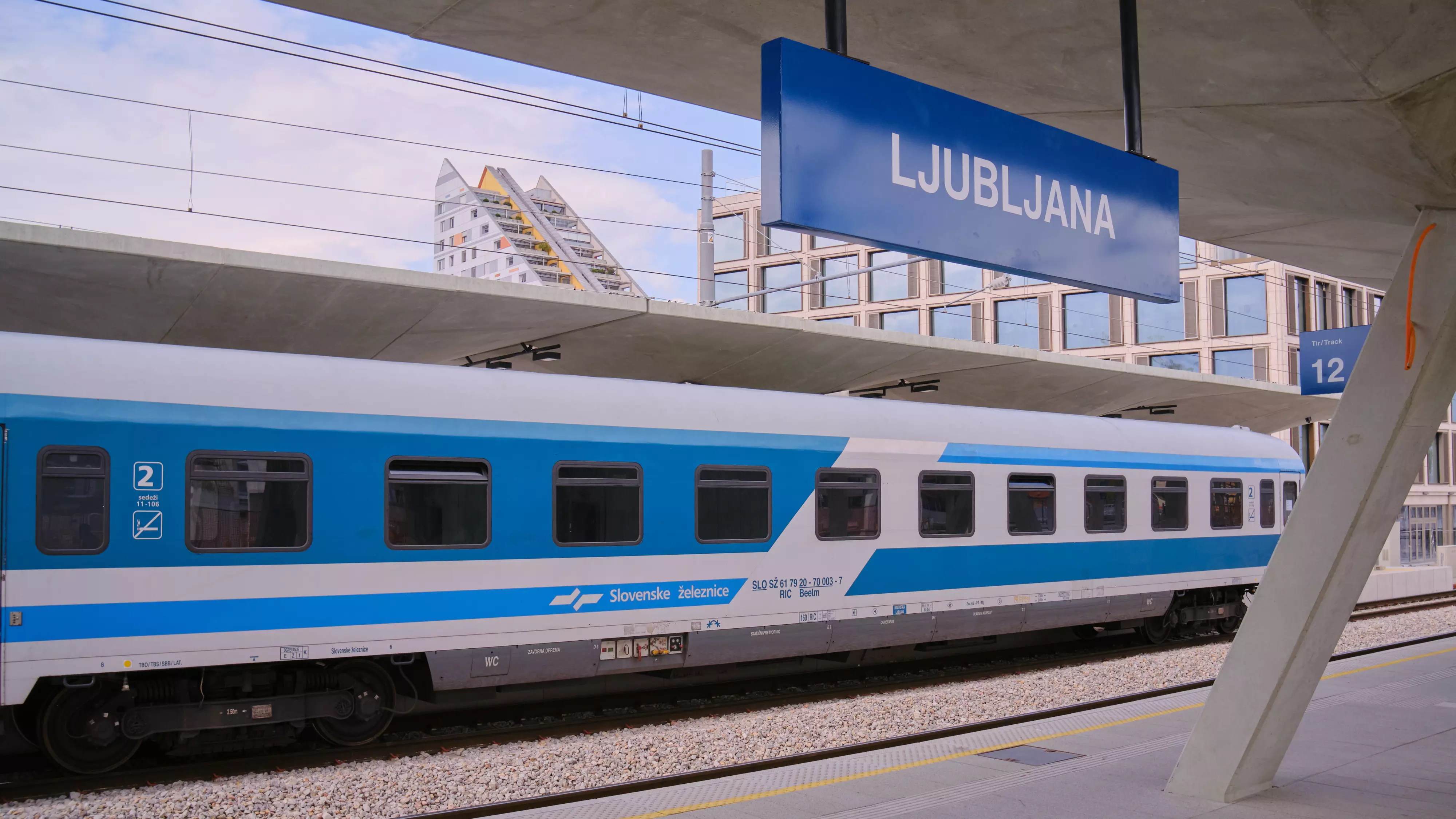
Slovenia is a relatively easy country to use with FIP because all rail lines are operated by the state railway Slovenske železnice. FIP Coupons and FIP 50 Tickets are accepted there.
Reservations are mandatory for some train categories, but they are comparatively inexpensive to buy on site. Certain train categories also require supplements, which can still be purchased on board. Reduced FIP tickets and reservations are sold at ticket offices on site. If a station has no ticket office, a surcharge-free purchase on board is also possible. For international routes, the required tickets are available at specially designated ticket counters at major stations.
SŽ Website
The SŽ website shows national SŽ connections and routes to some destinations in neighbouring countries.
DB Website
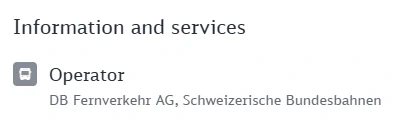
You can search for trains using the journey planner. In the More Information section for each train, the operator is specified. For cross-border connections, multiple operators are often involved.
(The operator information is correct in almost all cases. Outside Germany, operator details may be incorrect if train numbers are used more than once.)
vagonWeb
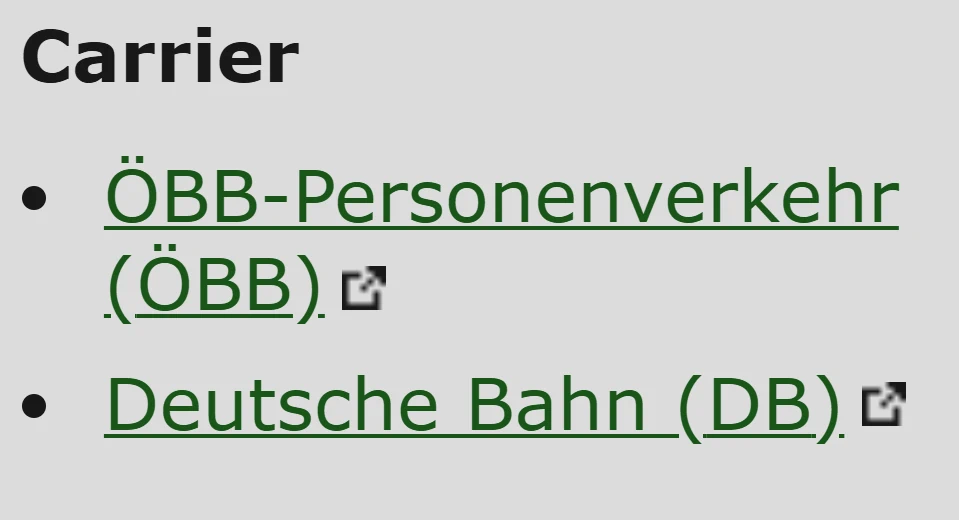
On the vagonWeb website, you can search for individual train numbers. However, it is not possible to search for connections. If several trains with the same train number exist, you must select the correct route of the train. Afterwards, the Carrier is displayed. For cross-border connections, multiple operators are shown.
Interesting
Slovenia’s rail network is just over 1,200 kilometres long, but it still connects many important cities and sights. The east–west axis from the second-largest city Maribor via Ljubljana to the Italian border and the Adriatic coast, together with the north–south connection from the Austrian border via the capital to the Croatian border, are the country’s most important lines. Modern Stadler trains are used on many electrified regional routes, while the branch lines are served by both modern and older diesel multiple units.
Travel speeds are rather low. The fastest connection is between the capital Ljubljana and Maribor, where speeds of up to 160 km/h are possible. True clock-face timetables are rare, but there are usually several trains per day on each route. The number of services is higher on weekdays than on weekends, and some stations are served only from Monday to Friday.
The most scenic railway line in the country is the Bohinj Railway from Jesenice to Nova Gorica, which runs spectacularly through mountains and valleys. It also passes Bled, one of the country’s main tourist highlights. The route between Ljubljana and the Italian border also passes the important tourist towns of Postojna and Divača.
Arrival and Border Points
Italy
From Italy, regional trains can enter Slovenia via Sežana and continue to Ljubljana. There are two regional trains per direction each day, one of which starts in Udine (as of 2026). In Villa Opicina, passengers must change from the FS train to the SŽ train. This route is not always fully represented in timetables and journey planners. For example, SŽ often only knows the service from Villa Opicina onward, while FS knows it only up to Villa Opicina. Sometimes the trains are displayed as through services. For the cross-border section, FIP Coupons from both countries (FS and SŽ) or a through reduced FIP ticket are required.
The Nova Gorica border crossing (Gorizia Centrale – Nova Gorica) is only used for passenger traffic on special occasions. Instead, this section is usually travelled on foot or by bus.
Booking FIP Tickets for the cross-border section between Slovenia and Italy is not possible online. However, very cheap regular tickets for the cross-border section can be purchased via Trenitalia. These are more expensive via SŽ.
Croatia
Several routes from Croatia to Slovenia exist, but not all are served regularly. The most important connection runs from Zagreb via the Dobova border crossing, usually to Ljubljana or beyond, for example to Austria. There are a few trains per day in each direction, including a night train that continues from Croatia to western Europe.
There are also some services from Rijeka toward Ljubljana. The other border crossings are currently much less important. Travel from Pula to Ljubljana therefore requires careful planning. On all cross-border connections, FIP Coupons from SŽ and Croatian HŽ, or a through reduced FIP ticket, must be available.
Austria
All three Slovenian rail border crossings are served several times a day from Austria. From Villach, trains run via Jesenice toward Ljubljana and sometimes onwards to Croatia. The routes usually operate at least every two hours.
From Graz, Maribor can be reached hourly by long-distance and regional trains direct via Spielfeld-Strass. The connection between Austrian Bleiburg and Maribor is less frequent and operates mainly as a regional service. On all routes, ÖBB and SŽ FIP Coupons or a through reduced FIP ticket are required.
Hungary
Hungary and Slovenia are directly connected by rail only via the Hodoš border crossing. One or two long-distance trains run daily from Budapest to Ljubljana, sometimes continuing to the Adriatic coast at Koper. These services are operated by MÁV on the Hungarian section and by SŽ on the Slovenian section.
For a through journey, either a reduced FIP ticket or FIP Coupons for both railways are required. It is important to check whether the trains actually travel via Hodoš, because there are also direct Hungarian services to Slovenia via Austria. In that case, an additional ÖBB FIP Coupon would be required for the Austrian section. There are also regional trains from Zalaegerszeg in Hungary to Hodoš in Slovenia operated by GySEV and SŽ. For these services, a GySEV FIP Coupon is required for the Hungarian section.